Paylaş
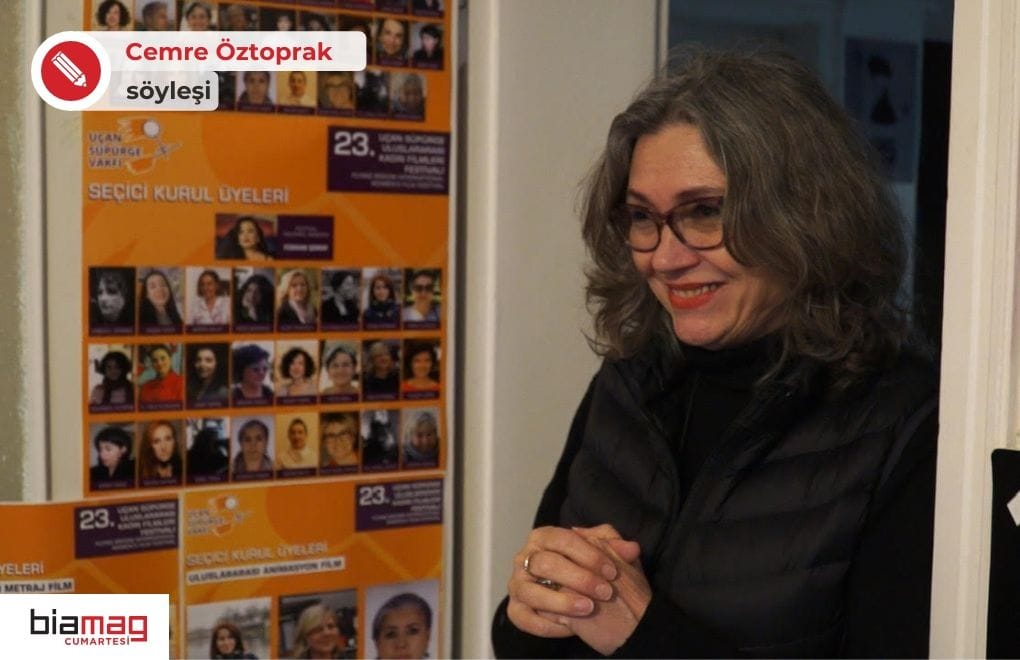
Halime Güner, President of the Flying Broom Foundation, evaluated the 23-year journey of the Flying Broom International Women’s Film Festival in an interview with bianet.org.[/av_promobox]
I see that period as a very fortunate one; we had not yet encountered project feminism, or it was not as widespread. In other words, there were not so many people writing projects from the center and working locally, instead of supporting local grassroots organization.
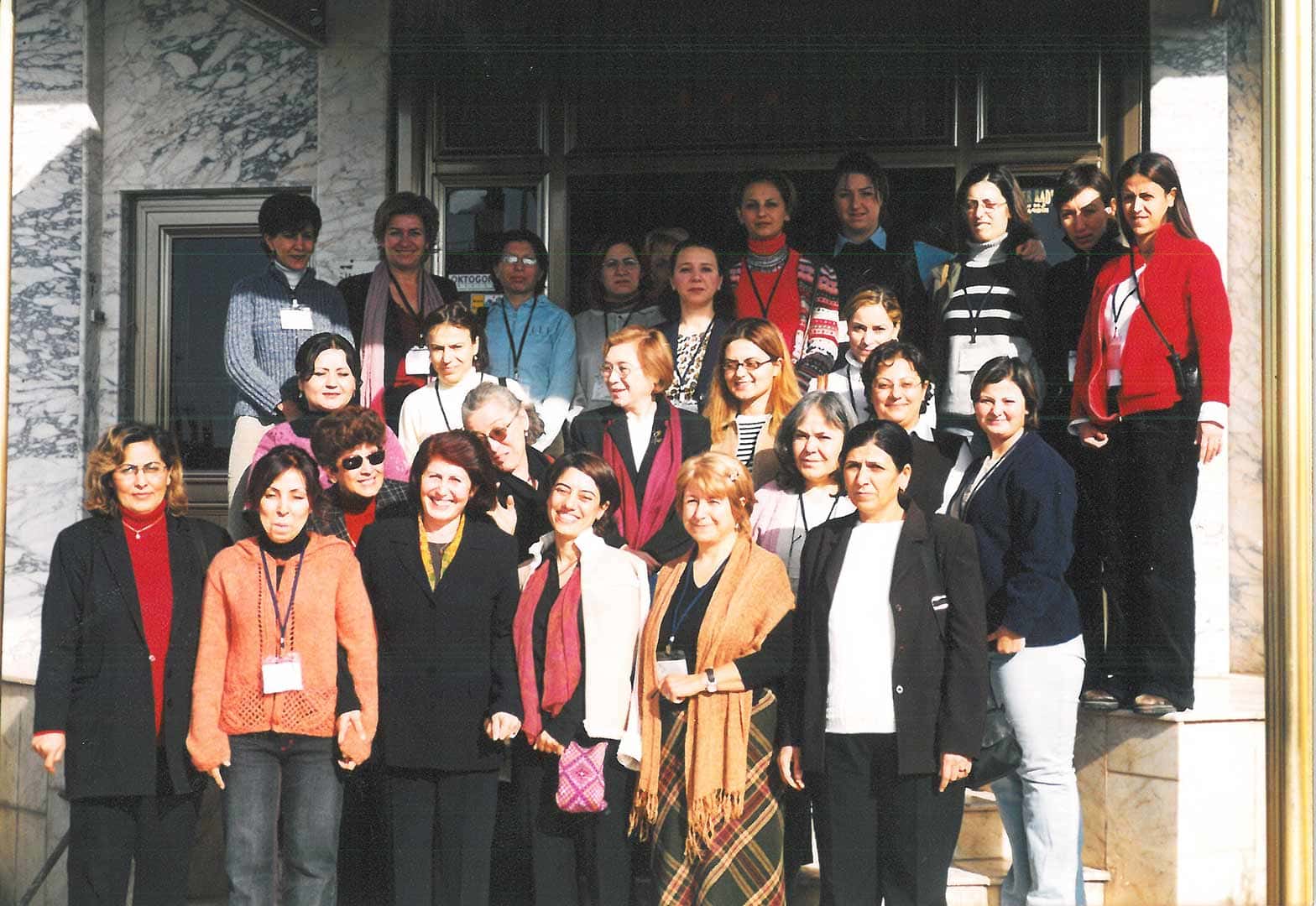
We would not write projects without discussing what civil society is, what it wants to change and transform, and our needs. We were eager to share everything we learned with each other. Creating a collective impact was something completely different. For example, as Flying Broom, we organized meetings with women from all 81 provinces three times; we met with women’s organizations in each province many times. These meetings taught us the power of mutual learning.
We have a very different founding story from the NGOs established in recent years, that’s true. First of all, we came together with women we trusted, with whom we came together in consciousness-raising groups and caught common excitements. It seems we thought about everything from the beginning. We did workshops such as ‘Anger, Rage, Conflicts and Competition’ with Leyla Navaro several times to prevent our egos and prejudices, which we talk about a lot now and sometimes cannot get out of. We fully experienced conversation, negotiation, competition if necessary, anger and objections. We also encountered the positive energy of competition and conflict. We also saw the benefits of these, but we never called anyone ‘the other,’ as we see these days. We did not use discriminatory language. We did not prepare speeches without referring to labor and history. Instead of being an organization that constantly writes projects and looks for resources, we transformed ourselves into a resource. I wish these would continue more.
Unfortunately, this lasted about 15 years, but we were all swept away by the funds of that period and the different accumulations of the changing teams. We worked with so many experts for institutionalization. I don’t know if institutionalization was necessary, but as a result, we could not manage the process well.
Cemre, can you imagine; we were 17 people working as a professional staff who did 7-8 projects at the same time, gave opinions on television channels every day, and were always at the forefront of all kinds of events. We had the air of saying, ‘We did the most work, excluding the consultants.’ However, we did not understand in those days that pursuing being very successful as an NGO meant leaving others behind. I hope the pandemic period will show this to many people and NGOs.
When we experienced the 1999 earthquake, we had difficulties in organizing on this issue. Because aid from abroad had to go only to the state, not to civil society. Fund providers in the world said that we want to support the civil society organizations of that country, not the state. Unfortunately, the law did not allow this at that time.
During the Ecevit government, the decree that civil society organizations could also receive support from abroad was urgently approved in the early morning. Since then, civil society organizations have become stronger in every sense, providing independent, objective grassroots organization. It became a bridge between the grassroots and decision-makers, lobbying and advocacy increased. With this power, change and transformation began; most importantly, ‘laws’ changed.
This date was a milestone for civil society organizations. Now, networks have been established among NGOs during the pandemic process. Solidarity, cooperation and organization among NGOs have started to be discussed again intensely. We started to hold meetings that we have not been able to do for years via Zoom. We started to read these new situations together with several generations at the same time. A separate culture of the internet environment has emerged. In Zoom meetings, you listen to the other party to the end, listening is as important as talking, even more…
I digressed, but this environment is a very important environment for culture and art meetings, and our festival does exactly that. The festival idea emerged as an important method that Flying Broom benefited from in its steps to strengthen women’s organizations. Taking advantage of the fast and effective power of cinema and its striking narrative technique has become a basic communication tool for a strong organization. Because cinema has shed light on this path for us by hearing each other, thinking about what we hear, and seeing the similarities and differences we experience, on the way to ‘struggling by taking strength from each other to obtain the rights we demand,’ which is our most important wish.
We did not know how to make a film festival; but we knew those who knew this job. I went to meet with the late Mahmut Tali Öngören, the founder of the Ankara Film Festival. I wanted to learn the story of the emergence of this festival from him. Afterwards, we made an offer to Seçil Büker, who was also in the Ankara Film Festival team and also Turkey’s first cinema professor, to establish the festival together. Thus, our first international correspondence went with the signature of Seçil Büker as our festival coordinator.
Our dream as Flying Broom was to organize a festival rather than a festival; a two- or three-day festival… But Seçil, with her vast knowledge and experience of cinema, explained that an international festival might be more appropriate for Flying Broom, and now we say, ‘How well we did!’ Thanks to this, we made many friends from abroad; we gained a lot of knowledge. For a period, we were on the board of directors of the women’s film festival in Europe. Although we experienced a break for a while, last year we invited women’s film festival directors from 18 different countries to Ankara and met with women from five continents. It was a very exciting meeting for all of us.
If you ask about the team, Yıldız Ecevit, Filiz Kardam and I were the board members, although we were a company when the festival started. Our partnership with Sündüz Haşar, one of our founding team, still continues. In the early years of the festival, there were long-term employees in the team. We used to pin badges on our friends who worked at the festival for 10 years and hold ceremonies. We have not been able to do this in recent years, unfortunately. I think the main reason for this is the nature of the job: The festival is a “temporary job”. The connections are many, the “forms of relationship are various”. Women’s organizations contain places where we can pull according to our own egos. When you follow a job, power-holder experience is described as domination, lack of coordination when late. When we say thank you to those who support us, reminders of freedom and independence, the feeling of success is less for those who experience it all…
Looking back at the history, another important issue besides these is that the festival starts mainly with zero budget, cannot implement a regular wage policy, and therefore cannot keep a professional staff for a long time. Frankly, our weakest link is that the staff cannot be long-term. It’s our troubled topic.