Paylaş
The Flying Broom Foundation is the primary driver of the Inspiring Change through Arts and Culture in Turkey: Youth Advocacy for Gender Equality and Marginalized Women (With Art) Project, which launched on January 1, 2024. Supported by the Delegation of the European Union to Turkey under the IPA III Program, the Art Project aims to strengthen participatory democracy and contribute to the advancement of human and fundamental rights in Turkey by supporting rights-based civil society organizations. It also aims to facilitate interaction, participation, and advocacy through culture and arts to increase gender equality among young people and the inclusion of disadvantaged young women in local communities.
The project consortium consists of the State Theatre, Opera and Ballet Employees Assistance Foundation (TOBAV), Mordem Art and Ecological Life Association (MORDEM), Young Volunteers Association (GGD), and KEAN (Cell of Alternative Youth Activities). This project aims to carry out activities for civil society organizations and young people over a three-year period, strengthening their capacity and raising awareness of gender equality through culture and arts. The first target group of the project is 50 rights-based civil society organizations working to advance the rights of women and girls in 11 provinces: Ankara, Edirne, Diyarbakır, Hakkari, Van, İzmir, Niğde, Kırşehir, Nevşehir, Sivas, and Aksaray. The second target group is young people aged 15-24 living in 11 cities, representing diverse communities in terms of ethnicity, refugee status, religious affiliation, native language, and gender identity and orientation.
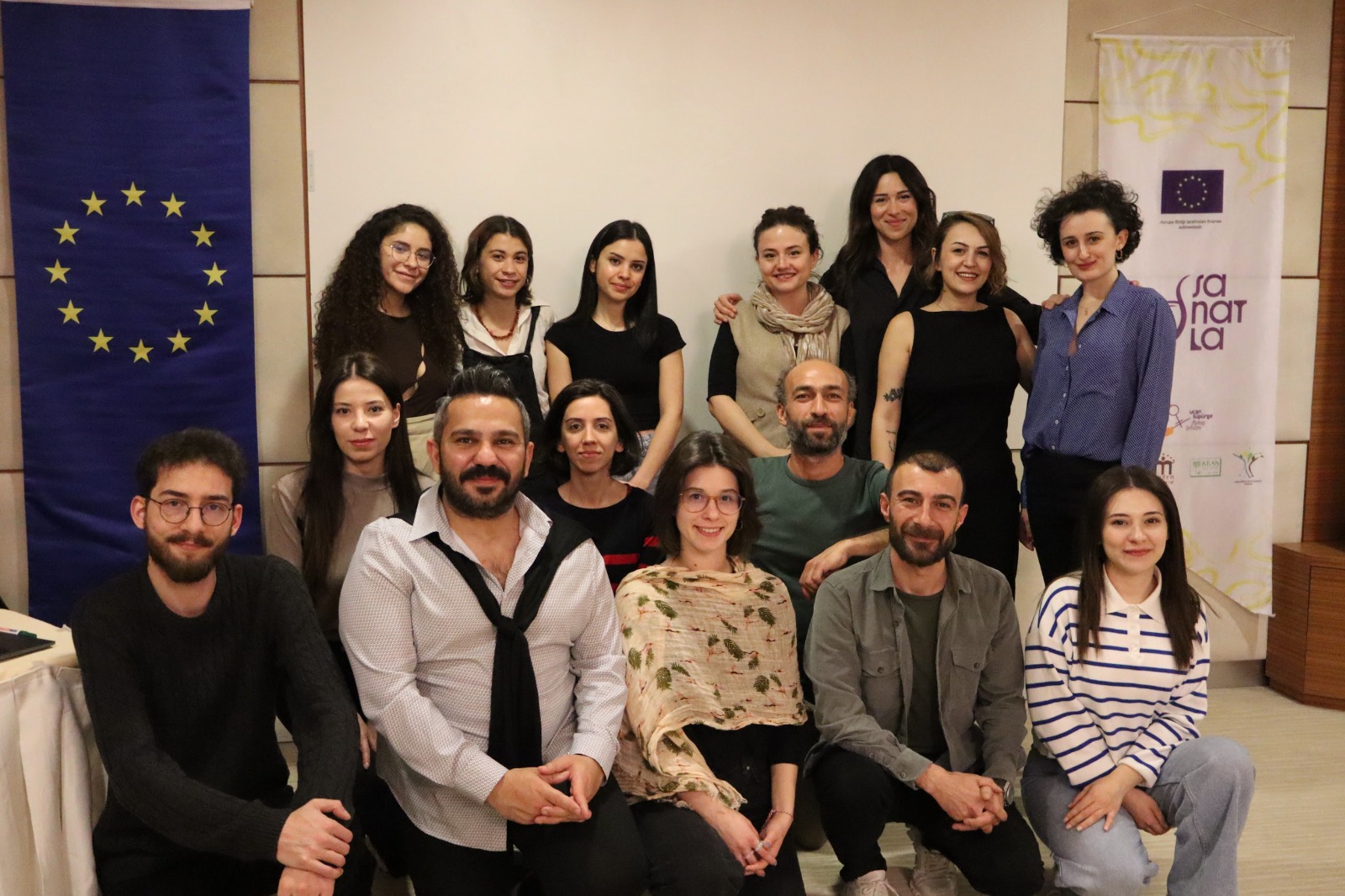
The Opening Meeting, our first event within the scope of the Art Project, was held at the Demora Hotel in Ankara on March 27-28, with the participation of all project partners (TOBAV, MORDEM, GGD, and KEAN), along with Amra Levnjak, Operational Officer for the Art Project from the EU Delegation to Turkey, and the Flying Broom Foundation Board of Directors. In her opening remarks, Ms. Levnjak, from the EU Delegation to Turkey, emphasized that the partnership between the EU Delegation to Turkey and the Flying Broom Foundation stems from its rights-based work and its commitment to cultural and artistic activities. She shared her excitement for the project, which will be carried out with young people in Turkey, saying, “Youth are our future, but they are also our voice today.”
During the two-day meeting, all project partners reviewed the project activities, a project advisory board was formed, the ethical principles to be observed during project implementation were determined, and a commitment protocol was subsequently signed. On the second day of the meeting, young rights advocates from civil society organizations in Ankara (GoFor, Youth Services Center (GSM), Capital Youth Assembly) and universities (METU, Bilkent University) also participated in the meeting. Experiences were shared on the priority agendas of young people in Turkey, the gender-related dimension of these issues, the differences in experience of women and LGBTI+ individuals, and suggestions for points that need to be considered within the scope of the Art Project. As the experiences shared by the youth rights advocates show, while economic problems are the main agenda of young people, this problem negatively affects many areas such as socialization, participation in cultural and artistic activities, and family relationships. Again, the low rate of youth organizing in civil society; The main problems on university campuses in Turkey include the lack of space provided (not allowed) by the school administration to student groups, the lack of gender equality in campus areas, and very limited access to information on sexual and reproductive health, even on campus.
Our opening meeting strengthened our relationship with all project partners, and meeting with young rights defenders and sharing experiences allowed us to take important notes for other upcoming activities of the Art Project, while also reminding us once again of the importance of civil society organizations and intergenerational solidarity.